

Organic Carbon Amendments Affect the Chemodiversity of Soil Dissolved Organic Matter and Its Associations with Soil Microbial Communities
Organic Carbon Amendments Affect the Chemodiversity of Soil Dissolved Organic Matter and Its Associations with Soil Microbial Communities
Xiao-Ming Li, Qing-Lin Chen, Chen He, Quan Shi, Song-Can Chen, Brian J. Reid, Yong-Guan Zhu, and Guo-Xin Sun*
State Key Laboratory of Urban and Regional Ecology, Research Center for Eco-Environmental Sciences, Chinese Academy of Sciences, Shuangqing Road, No. 18, Haidian District, Beijing 100085, People’s Republic of China
State Key Laboratory of Heavy Oil Processing, China University of Petroleum, 18 Fuxue Road, Changping, Beijing 102249, China
School of Environmental Sciences, University of East Anglia, Norwich Research Park, Norwich NR4 7TJ, U.K.
University of Chinese Academy of Sciences, Yuquan Road, No. 19A, Shijingshan District, Beijing 100049, People’s Republic of China
Key Laboratory of Urban Environment and Health, Institute of Urban Environment, Chinese Academy of Sciences, Jimei Road, No. 1799, Jimei District, Xiamen 361021, People’s Republic of China
*Corresponding Authors: Guo-Xin Sun − Email: gxsun@rcees.ac.cn
DOI: 10.1021/acs.est.8b04673
Keywords: Bacteria; Dissolved organic matter ;Molecules; Sludges; Soils
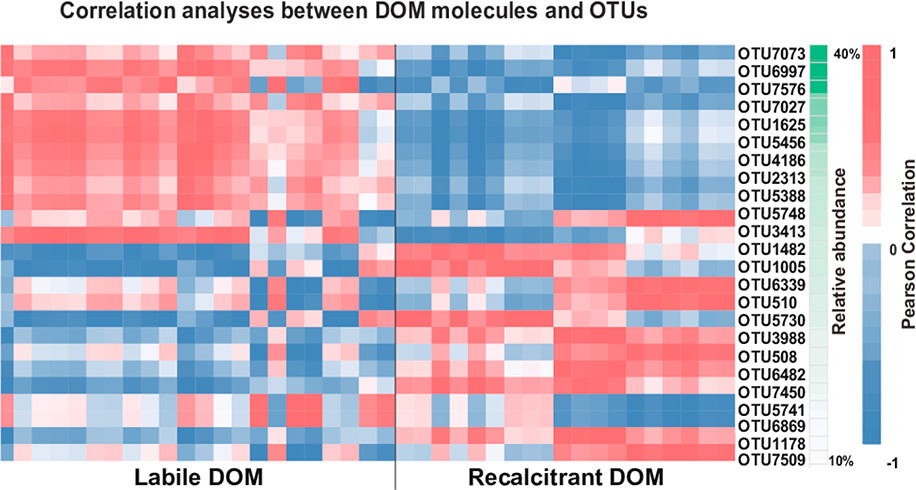
Abstract:The “4 per mil” initiative recognizes the pivotal role of soil in carbon resequestration. The need for evidence to substantiate the influence of agricultural practices on chemical nature of soil carbon and microbial biodiversity has become a priority. However, owing to the molecular complexity of soil dissolved organic matter (DOM), specific linkages to microbial biodiversity have eluded researchers. Here, we characterized the chemodiversity of soil DOM, assessed the variation of soil bacterial community composition (BCC), and identified specific linkages between DOM traits and BCC. Sustained organic carbon amendment significantly (P < 0.05) increased total organic matter reservoirs, resulted in higher chemodiversity of DOM and emergence of recalcitrant moieties (H/C < 1.5). In the meantime, sustained organic carbon amendment shaped the BCC to a more eutrophic state while long-term chemical fertilization directed the BCC toward an oligotrophic state. Meanwhile, higher connectivity and complexity were observed in organic carbon amendment by DOM−BCC network analysis, indicating that soil microbes tended to have more interaction with DOM molecules after organic matter inputs. These results highlight the potential for organic carbon amendments to not only build soil carbon stocks and increase their resilience but also mediate the functional state of soil bacterial communities.