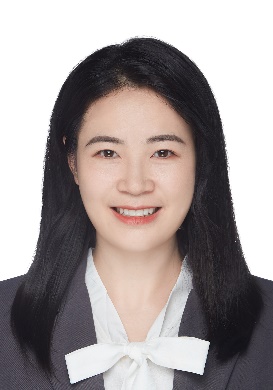
李倩玮,博士,副教授,博士生导师,校级青年拔尖人才。2016年毕业于英国邓迪大学获得环境微生物博士学位。现任化学工程与环境学院副院长。主要从事环境微生物、污染物迁移转化等方面的教学与研究工作。主持国家自然科学基金、科技部重点研发子课题、企业等多项项目。以第一/通讯作者身份在Current Biology(Cell子刊)、Water Research、Environmental Sciences & Technology、Chemical Engineering Journal、Nano Research、Environmental Microbiology、Environmental Sciences: Nano等环境化工领域期刊发表多篇论文。
邮箱: qianweili@cup.edu.cn 办公电话:010-89739050
研究方向
[1] 微生物-矿物-水界面的反应机理研究
[2] 重金属污染物在环境中的迁移转化行为
招生信息
课题组欢迎以下学生加入:
· 硕士研究生(环境科学与工程、环境工程、化学工程、工程管理)
· 博士研究生(化学工程与技术、环境工程)
· 对科研感兴趣的本科生(科研训练/毕业设计)
适合专业背景:
· 环境科学与工程
· 化学工程与技术
· 生物工程 / 微生物学
· 化学或材料相关专业
教育背景
2012-2016 英国邓迪大学 环境微生物学 博士
2010-2012 哈尔滨工业大学 遗传学 硕士
2006-2010 哈尔滨工业大学 生物工程 学士
工作经历
2024.08-至今 化学工程与环境学院 副院长
2019.10-至今 环境科学与工程系 系支部书记
2017.06至今 副教授,化学工程与环境学院,中国石油大学(北京)
2023.04-2024.01 校党委宣传部,副部长(挂职)
2016.11-2017.06 讲师,化学工程与环境学院,中国石油大学(北京)
主讲课程
本科课程:
· 生物化学
· 可持续发展概论
· 毕业实习
· 生物化学(全英文)
研究生课程:
· 环境分子生物学技术
· 环境科学与工程前沿讲座
承担项目
[1] 国家自然科学基金面上项目, 生物矿化耦合自絮凝强化处理典型化工废水的机理研究,2025-2028,主持,在研。
[2] 国家自然科学基金青年项目,油田土壤环境中产脲酶真菌的多样性及其对重金属离子的矿化机制研究,2018-2020,主持,已结题。
[3] 科技部外国专家项目,2023-2024,主持,已结题。
[4] 国家重点研发计划子课题,石油污染土壤热脱附工艺系统设计研究 2019-2022,第二负责人,已结题。
[5] 山西省科技合作专项,典型产煤区重金属-多环芳烃复合污染场地治理关键技术研究,2024-2026,主持,在研。
[6] 中国石油大学(北京)拔尖人才科研项目,炼化废催化剂有价金属生物定向转化调控机制,2023-2026,主持,在研。
[7] 中国环境科学研究院环境技术工程有限公司服务项目,生物矿化协同渗滤液氮磷及抗生素去除的机理与应用研究,2025-2026,主持,在研。
[8] 国家管网集团技术服务项目,复杂环境下腐蚀层结构解析和失效特征分析, 2023-2024,主持,在研。
[9] 国家管网集团技术服务项目,交直流混合干扰评价指标及缓解方案验证实验,2024-2025,参与,在研。
[10] 国家管网集团技术服务项目,不同杂散电流干扰下排流器关键控制指标验证实验,2025-2026年,主持,在研。
[11] 中石油安环院重点实验室开放基金,生物矿化复合材料处理卤代烃有机废水的研究, 2020-2024,主持,在研。
[12] 国家管网集团技术服务项目,交直流混合干扰腐蚀风险边界参数测试与分析项目,222年,主持,已结题。
[13] 中国石油大学(北京)学院自主科研项目,烃类污染物对地质微生物迁移转化重金属过程与机制的研究,2020-2023,主持,已结题。
[14] 中国石油大学(北京)引进人才科研项目,电镀废水中产脲酶真菌的分离鉴定及其对重金属的回收利用,2017-2019,主持,已结题。
[15] 中石油安环院重点实验室开放基金,新型多孔碳/纳米零价铁复合材料的制备及其对卤代烃降解机制的研究,2017-2018,主持,已结题。
代表性论文
[1] Li, Q., Zhang, M., Bian, Z., Liu, D.*, and Chen, C.* (2026). Enhancing Staphylococcus succinus tolerance via pre-mineralization for bioflocculation-based oilfield water treatment. Water Research 289, 124794.
[2] Li, Q.*, Ma, H., Zhang, M., Wei, B., and Liu, D*. (2026). Synergistic effects of protein coronas and heavy metals on ROS generation: Implications for microplastic-microbe interactions. International Biodeterioration & Biodegradation 207, 106225.
[3] Li, Q., Liu, D.*, Wei, B., Yan, W., and Chen, C. (2026). Manganese oxide activation of peroxydisulfate: Evaluation via redox potential difference (ΔE) index. Water Research 289, 124913.
[4] Li, Q., Liu, D., Yan, W., Liu, H., Chen, C. (2026) Comparative insights into the role of oxygen vacancies in α-MnO 2 for activating peroxymonosulfate and peroxydisulfate. Inorganic Chemistry Frontiers.
[5] Li Q., Ma, H., Zhang, M. Wei, B., Liu, D. (2026) Synergistic effects of protein coronas and heavy metals on ROS generation: Implications for microplastic-microbe interactions. International Biodeterioration & Biodegradation 207, 106225.
[6] Li, Q., Zhang, M., Liu, H., Wang, H., Liu, D., Chen, C. (2026) Integrating indigenous petroleum-degrading bacteria into soil washing for enhanced remediation efficiency. Journal of Cleaner Production 546, 147813.
[7] Wei, B., Liu, D., Wu, Q., Li, Q., Chen, C. (2026) Forward osmosis-induced hydrovoltaic electricity generation using polyaniline-modified carbon mesh electrodes. Journal of Membrane Science 745, 125270
[8] Zhang, M., Wei, B., Liu, H., Liu, D., Gadd, G.M., Li, Q.*, and Chen, C. (2025). Simultaneous removal of hardness and organic matter from oilfield-produced water by microbially induced calcite precipitation. Water Research 276, 123252.
[9] Wei, B., Zhang, M., Liu, H., Li, Q.*, and Liu, D*. (2025). Capacitive deionization coupled with electro-activated persulfate for simultaneous removal of salt and organic pollutants from water. Separation and Purification Technology 373, 133577.
[10] Wei, B., Liu, D., Peng, R., Zhou, Y., Li, Q.*, and Zhao, H.* (2025). Enhanced electron transfer in Fe–N–C catalysts for nitrobenzene reduction: from electrodes to functional materials. Frontiers of Environmental Science & Engineering 19, 158.
[11] Liu, D., Wei, B., Zhang, C., and Li, Q.* (2025). Phosphate recovery through the redox cycling process using cerium-based adsorbents: High capacity and high stability. Journal of Environmental Chemical Engineering 13, 116167.
[12] Liu, D., Wei, B., Zhang, C., and Li, Q.* (2025). Electrochemically regulated cerium-based electrode for enhanced phosphate adsorption and desorption process. Separation and Purification Technology 360, 131025.
[13] Liu, D., Wang, Q., Wei, B., Yang, S., Li, Q., and Zhao, H.* (2025). Simultaneous removal of phosphate and hydroquinone using Fe3Ce1Ox(CA)/H2O2 Fenton-like system. Process Safety and Environmental Protection 199, 107322.
[14] Li, Q., Liu, D.*, Hou, J., Liu, H., and Chen, C. (2025). ZrO2 modified MnO2 catalysts for efficient peroxydisulfate activation and wide pH-range pollutant removal. New Journal of Chemistry 49, 20828-20837.
[15] Li, Q.*, Gong, L., Chen, X., Gadd, G.M., and Liu, D.* (2025). Dual role of microorganisms in metal corrosion: a review of mechanisms of corrosion promotion and inhibition. Frontiers in Microbiology Volume 16 - 2025.
[16] Lan, W., Wei, B., Li, Q., Feng, B., Wang, F., Bi, W., and Liu, D.* (2025). Corrosion mechanisms of pipelines with adjacent coating defects under AC interference: An interfacial process analysis. Materials & Design 256, 114295.
[17] Liu, D., Zhou, Y., Wei, B., Li, Q., and Zhao, H.* (2024). Analyzing the active sites of carbocatalyst for peroxydisulfate activation: Specific surface area or electrochemical surface area? Chemosphere 364, 143124.
[18] Li, Y., Ma, H., Li, Q., Yan, G., and Guo, S.* (2024). One-step synthesis of Pt-Nd co-doped Ti/SnO2-Sb nanosphere electrodes used to degrade nitrobenzene. Environmental Science and Pollution Research 31, 4528-4538.
[19] Li, Q., Zhang, M., Wei, B., Lan, W., Wang, Q., Chen, C., Zhao, H., Liu, D.*, and Gadd, G.M.* (2024). Fungal biomineralization of toxic metals accelerates organic pollutant removal. Current Biology 34, 2077-2084.e2073.
[20] Liu, D., Li, Q.*, Liu, E., Zhang, M., Liu, J., and Chen, C. (2023). Biomineralized nanoparticles for the immobilization and degradation of crude oil-contaminated soil. Nano Research 16, 12238-12245.
[21] Lan, W., Li, Q., Wei, B., Bi, W., Xu, C., and Liu, D.* (2023). Evaluation of AC corrosion under anodic polarization using microzone pH analysis. Corrosion Science 219, 111219.
[22] Li, Q., Liu, F., Li, M., Chen, C., and Gadd, G.M.* (2022). Nanoparticle and nanomineral production by fungi. Fungal Biology Reviews 41, 31-44.
[23] Liu, D.*, Li, Q., Hou, J., and Zhao, H.* (2021). Mixed-valent manganese oxide for catalytic oxidation of Orange II by activation of persulfate: heterojunction dependence and mechanism. Catalysis Science & Technology 11, 3715-3723.
[24] Wang, X., Ming, J., Chen, C.M., Yoza, B.A., Li, Q., Liang, J.H., Gadd, G.M., and Wang, Q.* (2020). Rapid aerobic granulation using biochar for the treatment of petroleum refinery wastewater. Petroleum Science 17, 1411-1421.
[25] Li, Q.*, Liu, J., and Gadd, G.M.* (2020). Fungal bioremediation of soil co-contaminated with petroleum hydrocarbons and toxic metals. Applied Microbiology and Biotechnology 104, 8999-9008.
[26] Li, Q., Liu, D., Wang, T., Chen, C.*, and Gadd, G.M. (2020). Iron coral: Novel fungal biomineralization of nanoscale zerovalent iron composites for treatment of chlorinated pollutants. Chemical Engineering Journal 402, 126263.
[27] Lang, X., Li, Q., Ji, M., Yan, G.*, and Guo, S. (2020). Isolation and niche characteristics in simultaneous nitrification and denitrification application of an aerobic denitrifier, Acinetobacter sp. YS2. Bioresource Technology 302, 122799.
[28] Liu, D., Li, Q.*, Li, S., Hou, J., and Zhao, H.* (2019). A confinement strategy to prepare N-doped reduced graphene oxide foams with desired monolithic structures for supercapacitors. Nanoscale 11, 4362-4368.
[29] Li, Q.*, Liu, D., Chen, C.*, Shao, Z., Wang, H., Liu, J., Zhang, Q., and Gadd, G.M. (2019). Experimental and geochemical simulation of nickel carbonate mineral precipitation by carbonate-laden ureolytic fungal culture supernatants. Environmental Science: Nano 6, 1866-1875.
[30] Lang, X., Li, Q., Xu, Y., Ji, M., Yan, G.*, and Guo, S. (2019). Aerobic denitrifiers with petroleum metabolizing ability isolated from caprolactam sewage treatment pool. Bioresource Technology 290, 121719.
[31] Liu, D., Li, Q., and Zhao, H.* (2018). Electrolyte-assisted hydrothermal synthesis of holey graphene films for all-solid-state supercapacitors. Journal of Materials Chemistry A 6, 11471-11478.
[32] Liu, D., Li, Q., Hou, J., and Zhao, H.* (2018). Porous 3D graphene-based biochar materials with high areal sulfur loading for lithium–sulfur batteries. Sustainable Energy & Fuels 2, 2197-2205.
[33] Li, Q., and Gadd, G.M.* (2017). Fungal nanoscale metal carbonates and production of electrochemical materials. Microb Biotechnol 10, 1131-1136.
[34] Li, Q., and Gadd, G.M.* (2017). Biosynthesis of copper carbonate nanoparticles by ureolytic fungi. Applied Microbiology and Biotechnology 101, 7397-7407.
[35] Li, Q., Liu, D., Jia, Z., Csetenyi, L., and Gadd, G.M.* (2016). Fungal Biomineralization of Manganese as a Novel Source of Electrochemical Materials. Current Biology 26, 950-955.
[36] Kumari, D.*, Qian, X.Y.*, Pan, X.*, Achal, V., Li, Q., and Gadd, G.M.* (2016). Chapter Two - Microbially-induced Carbonate Precipitation for Immobilization of Toxic Metals. In Advances in Applied Microbiology, Volume 94, S. Sariaslani and G.M. Gadd, eds. (Academic Press), pp. 79-108.
[37] Li, Q., Csetenyi, L., Paton, G.I., and Gadd, G.M.* (2015). CaCO3 and SrCO3 bioprecipitation by fungi isolated from calcareous soil. Environmental Microbiology 17, 3082-3097.
[38] Shi, C., Yan, P.*, Li, J., Wu, H., Li, Q., and Guan, S. (2014). Biocontrol of Fusarium graminearum Growth and Deoxynivalenol Production in Wheat Kernels with Bacterial Antagonists. International Journal of Environmental Research and Public Health 11, 1094-1105.
[39] Li, Q., Csetenyi, L., and Gadd, G.M.* (2014). Biomineralization of Metal Carbonates by Neurospora crassa. Environmental Science & Technology 48, 14409-14416.
[40] Gadd, G.M.*, Bahri-Esfahani, J., Li, Q., Rhee, Y.J., Wei, Z., Fomina, M., and Liang, X. (2014). Oxalate production by fungi: significance in geomycology, biodeterioration and bioremediation. Fungal Biology Reviews 28, 36-55.
[41] Wang, Z., Yan, P.*, Cao, L., Li, Q., & Lin, F. (2011). Effects of Nutritional Factors on Production of Bacterial Bioactive Metabolites against Aflatoxin Biosynthesis. Advanced Materials Research, 343–344, 564–567.
[42] Yan, P.*, Gao, X., Wu, H., Li, Q., Ning, L., and Guan, S. (2010). Isolation and screening of biocontrol bacterial strains against Aspergillus parasiticus from groundnut geocarposphere. Journal of Earth Science 21, 309.
发明专利
[1] 李倩玮,王通哲,邢杨。负载有纳米单质铁的复合材料及其制备方法和应用 CN201910831635.9 (实施许可)
[2] 李倩玮,汪华珍,陈春茂。基于层级疏水/亲水电极同步除盐和有机物的方法、装置 CN202110183426.5(已授权)
[3] 李倩玮,张苗,陈春茂。一种基于微生物的调剖驱油方法 CN202210587780.9 (已授权)
[4] 李倩玮,刘恩会,刘道庆,张苗,陈春茂。一种重金属生物有效性的检测装置和方法 CN202211155496.0(已授权)
[5] 李倩玮,张苗,韦标,陈春茂。一种用于石油污染土壤的微生物修复剂和修复方法 CN202310417896.2
[6] 李倩玮,韦标,刘道庆,张苗,张晨,陈春茂。一种基于电化学调控的磷酸盐吸附脱附方法 CN202311184465.2 (已授权)
[7] 刘道庆,张苗,李倩玮,边泽晨,陈春茂。一种工程菌及其构建方法和应用 CN202410102898.7
[8] 李倩玮,刘浩,刘道庆,陈春茂。二氧化碳捕获装置及二氧化碳捕获方法CN202411486430.9 (已授权)
教育教学相关荣誉
[1] 校级研究生教学成果一等奖(2025)(3项)
[2] 校优秀本科论文指导教师(2023年)
[3] 第二届党支部书记微党课大赛二等奖(2023年)
[4] 中国石油大学(北京)优秀教师(2022)
[5] 校优秀导师团队骨干(2022年)
[6] 北京市就业工作先进个人(2021)
[7] 校研究生优秀导学团队骨干(2021年)
[8] 优秀硕士论文指导教师(2021)
[9] 中国石油大学(北京)优秀共产党员(2019-2021)
[10] 中国石油大学(北京)就业工作先进个人(2019)
[11] 化学工程与环境学院“最美教师”(2019年,2023年)
[12] 化学工程与环境学院教学基本功二等奖(2019)